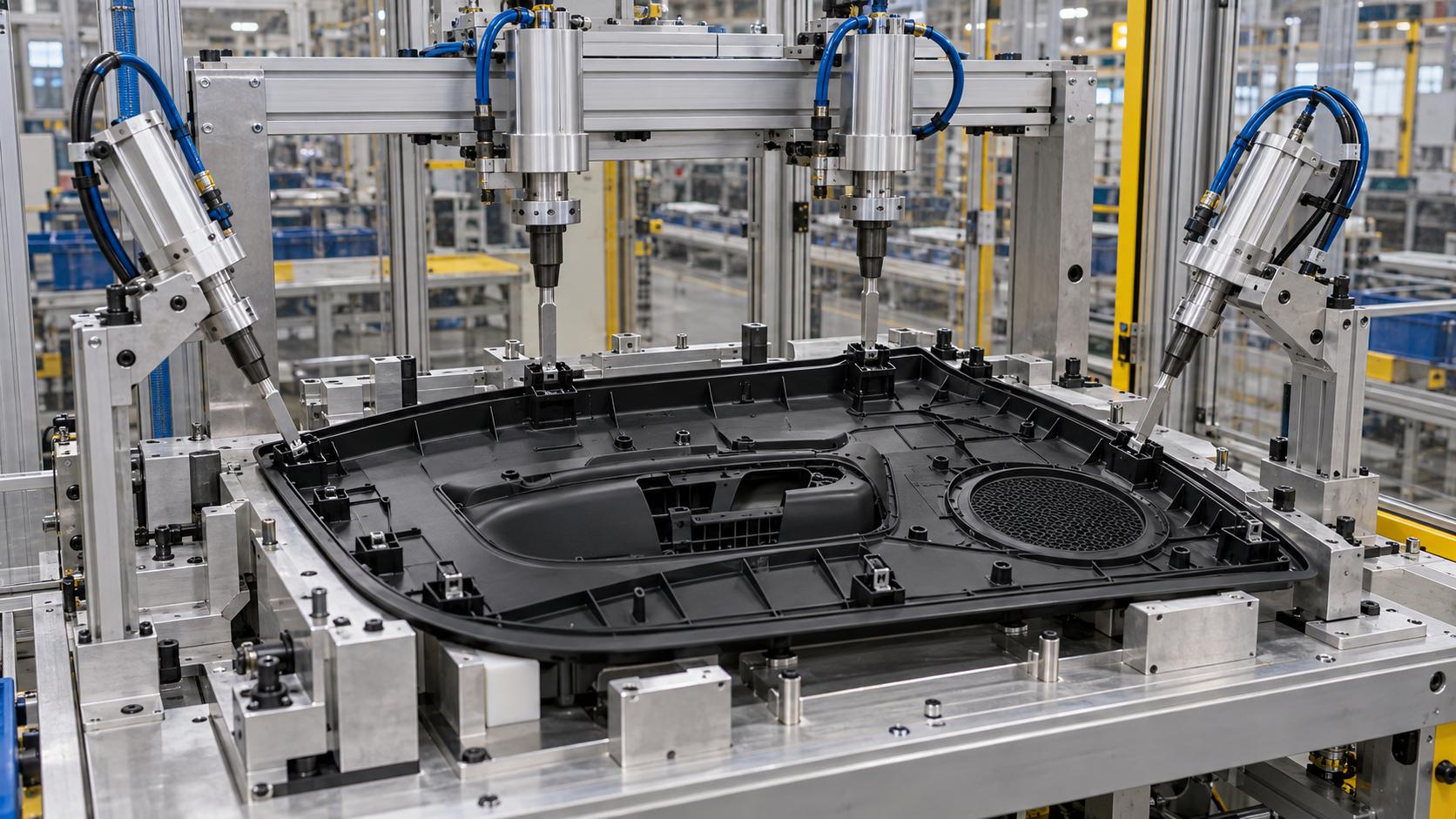
Door panel mounting brackets need secure joints and accurate positioning. This application concept uses fixed pneumatic ultrasonic modules to join compatible thermoplastic bracket feet to the back of a door trim panel. Dedicated tooling locates the components and supports each joining area while protecting the passenger-facing surface.
Suitable projects have accessible overlapping feet and a repeatable joining map. The head arrangement and firing sequence are developed from the actual panels, brackets and production requirements.
|
Application item |
Proposed solution |
|
Assembly |
Door trim panel with plastic mounting brackets or clip carriers. |
|
Joining area |
Accessible overlapping feet in compatible thermoplastic materials. |
|
Actuation and horn |
Guided pneumatic modules with slim flat piercing horns. |
|
Fixture |
Contoured panel nest with bracket location and local support. |
|
Head sequence |
Fixed heads operated in qualified groups or a defined sequence. |
We evaluate the required tool access and head arrangement using our automotive interior multi-head ultrasonic welding platform. The illustrated configuration is a starting point for an application review.
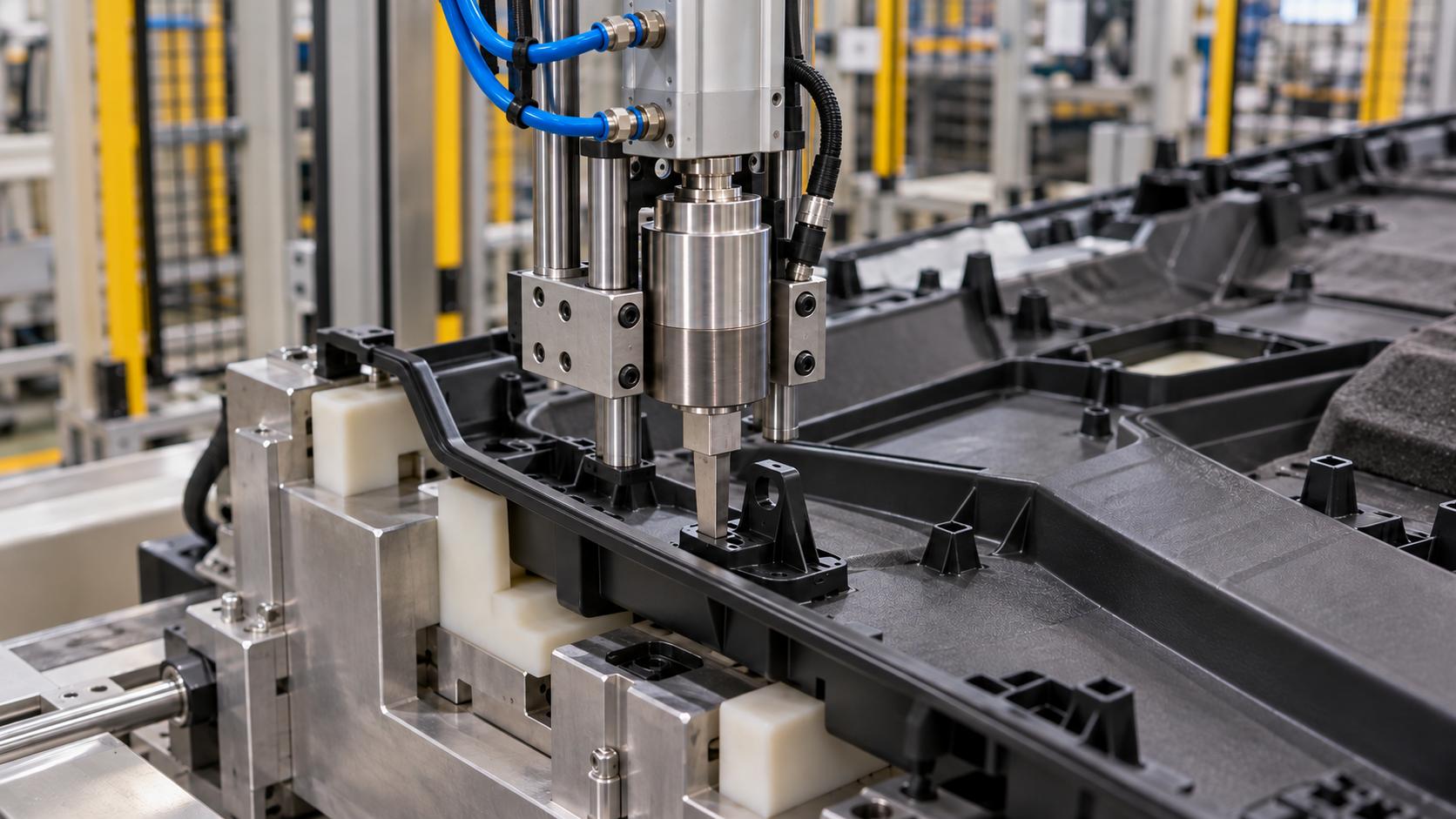
Each cylinder advances a guided ultrasonic module toward a bracket foot. In ultrasonic spot welding, the horn penetrates the overlapping plastic region while vibration produces localized melting. Hold pressure stabilizes the joint before the horn retracts. The slim flat horn must match the access, thickness and support conditions of the actual attachment.
AI-generated application illustration: a pneumatic ultrasonic module and slim flat piercing horn at a bracket foot. Final tooling is defined by the actual parts.
Confirm exact resin grades and compatibility before selecting a recipe. Fillers, additives and moisture can change weld behavior, as explained in TWI's materials guidance. Trials should use production-intent panels and brackets, including the permitted material and dimensional variation.
The firing sequence should be trialed with the complete assembly. Review interaction between nearby points, support movement and total station cycle before approving simultaneous operation.
A bracket can meet its retention target yet sit outside the required position. Inspect its location and assembly fit alongside joint strength. Check the passenger-facing surface after fixture release using the customer's agreed lighting and viewing conditions.
AI-generated application illustration of bracket seating inspection on the back of a door trim panel.
|
Check |
Acceptance basis |
|
Bracket retention |
Specified load direction, test method, required load and failure mode. |
|
Position and fit |
Bracket location and fit of the completed door trim assembly. |
|
Visible surface |
Customer limits for marks, whitening, distortion and print-through. |
|
Point consistency |
Agreed sampling by joining location, cavity and permitted variant. |
|
Cycle release |
Required components and joining results confirmed before unloading. |
Set numerical limits from the approved drawing and customer specification. Use physical tests to establish joint performance and define ongoing sampling.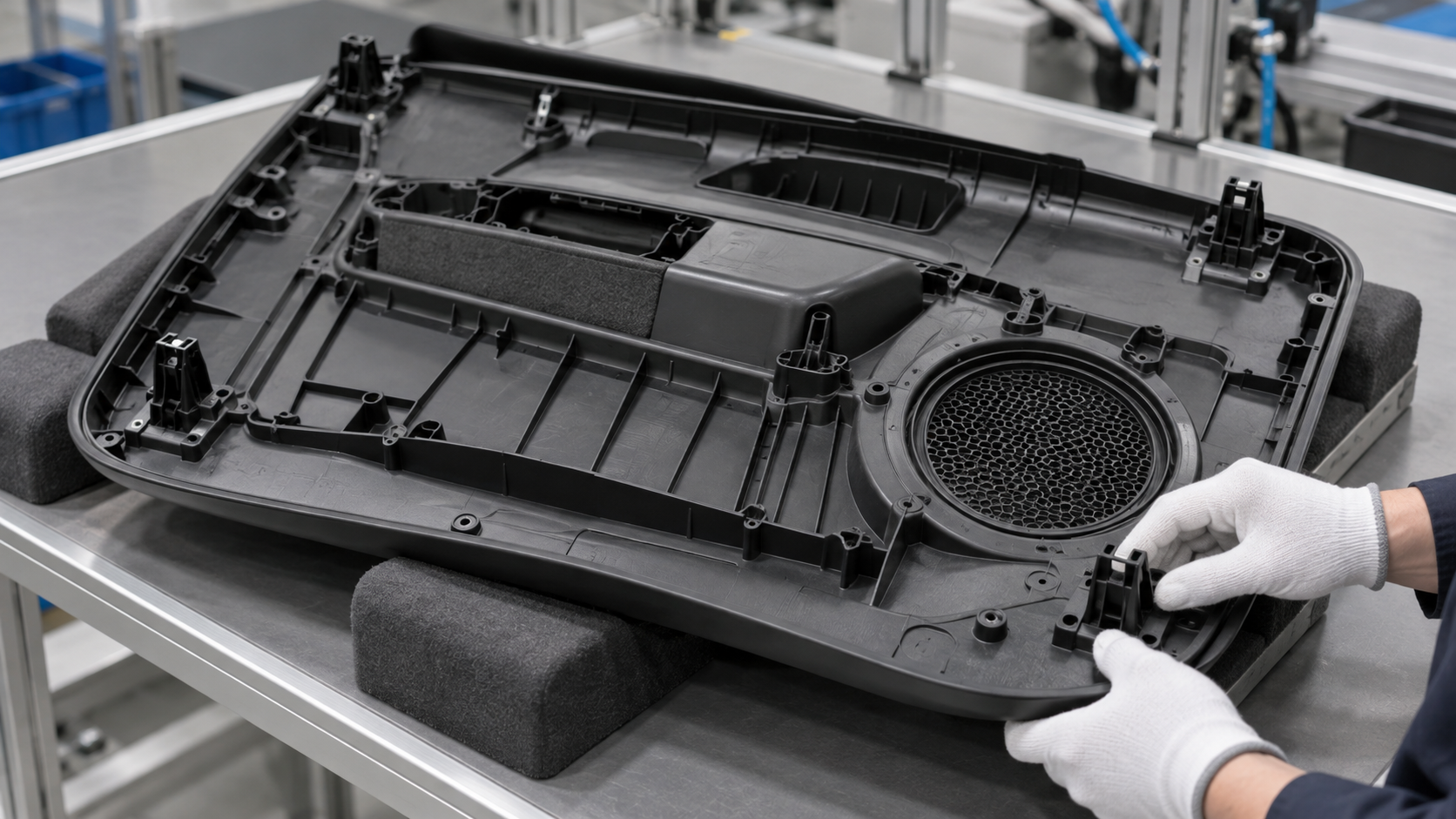
Send the panel and bracket CAD, joining map, exact material grades, samples, retention criteria, appearance requirements and target station cycle. Contact Dizo Sonics to review a dedicated ultrasonic welding solution for your door trim assembly.


